
Top tips for the new-age business analyst

In an age of rapid changes in the business, technology and lifestyles, organisations and individuals alike have to be adaptive. Business Analysts are not an exception to this much alike the other professionals. What does it take to be a modern day business analyst. Is it just the logical thinking, sound communication skills, good domain knowledge? Yes, these are all necessary but not sufficient. The modern day business analysts have to be agile, suave and tech savvy. They need to be adaptive and quick to embrace change, not just to survive but to succeed. In this post, we will look at what it takes to be a successful business analyst in this new-age of digital, mobile, agile and social times.
Transformation of business analysis in the new-age
Business analysis today is less of writing requirements in long documents and more of working with the design and development team. Its about owning the product roadmap, business strategy and/or the organisational processes. Gone are the days of writing up functional specifications documents running into hundreds and thousands of pages, spending months and years. Its the time for them to be agile and lean, and move on from being traditional verbose document writers. So business analysts today have to write user stories, create wireframes and mockups, model problems and solutions, validate and test the functionality. They must be open to change and pro-actively understand the impact of changes on business, technology, products and people.
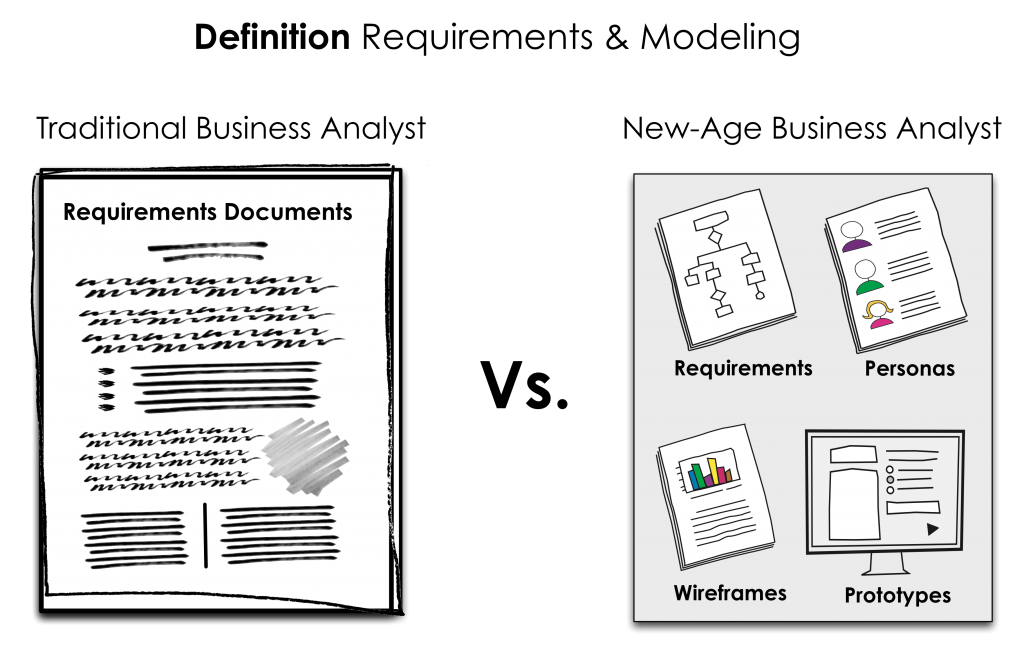
Business analysis is changing and how
From a traditional perspective, BAs needed to be good with communication skills. They were positioned as domain experts and to some extent looked up as product specialists. Some analysts have been positioned as specialists in business process management. However, in the last few years, business analysts have moved on from mere requirements owners to product/process owners. With the extensive use of agile practices, business analysts too emerged as the change management experts. In this digital, mobile, agile and social age, the focus of business analyst has shifted to user stories, customers and users engagement, stakeholder management, modeling domain, problems and solutions. In short, the modern day business analyst is versatile, cross-disciplined, tech-savvy, agile and a team-working professional.

The new-age Business Analyst’s toolset
I give below a diagrammatic representation of the toolset for the modern day business analysts. This provides a snapshot of the fundamental set of skills and knowledge that power the BAs today.
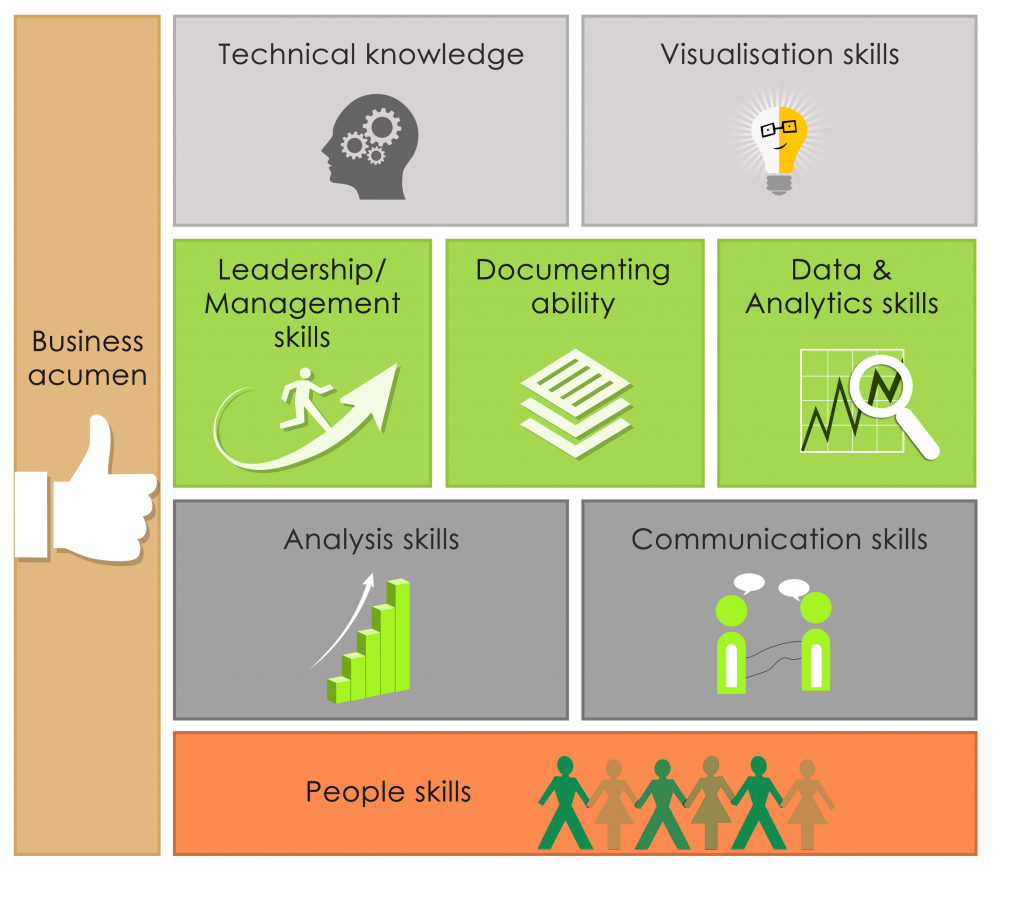
Alongside the mainstream skills, the business analyst needs to be a master of communication and leadership skills. From interacting with the key stakeholders, engaging with customers and users, and working alongside the team members, business analysts must have excellent “people skills”. Also, technology has been playing a key role in the design, development and delivery of products and services today. So, needless to say that the business analysts today have to be aware of the technologies, platforms and the application of these technologies to business context. I don’t however see that the business analysts have to be experts in technology but then they must be able to use technical applications, tools and methods to understand problems and help create solutions. Also, the new-age BAs have to be creative and be equally good with the right brain as much as they are comfortable with the data and analytics.
Hope you find this post useful – as always, please feel free to get back with your review comments and helpful feedback. On behalf of Team Texavi, I wish you and your loved ones a very Happy New Year, 2014! May your personal and professional lives be filled with joy, prosperity and success! Until next post, ciao!
Responses